
A Mother’s Lesson: How Love Looks in the Animal World
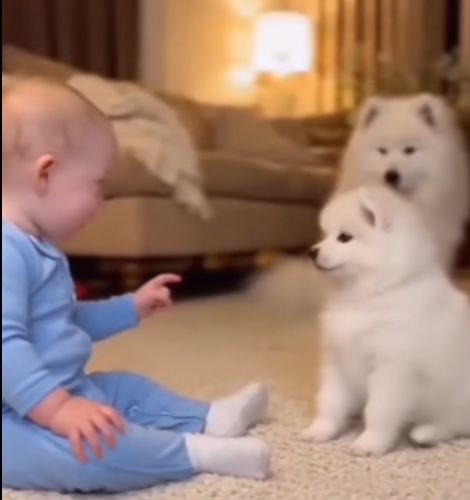
At first glance, it might seem like a strict or even tense moment—a mother dog correcting her playful puppy. But look closer, and you’ll see something far more meaningful: a lesson shaped by instinct, care, and unconditional love.
In the animal world, especially among dogs, teaching is not done with words. It is communicated through actions, body language, and gentle correction. A mother dog plays one of the most important roles in a puppy’s early life—not just providing food and warmth, but shaping behavior that will determine how the puppy survives and interacts with the world.
 When a puppy becomes too rough, bites too hard, or behaves in a way that could be dangerous later in life, the mother steps in. She may nudge, growl softly, or hold the puppy down briefly. To human eyes, this might look harsh—but in reality, it is controlled, measured, and purposeful. She knows exactly how much pressure to apply without causing harm.
This form of discipline teaches boundaries. It tells the puppy what is acceptable and what is not. It also helps the young dog understand social cues—how to behave around others, how to control its bite, and how to respond to warning signals. These lessons are critical. Without them, a puppy may grow into a dog that struggles to communicate properly or even puts itself in danger.
What makes this interaction so powerful is the balance between firmness and care. After the correction, the mother often returns to nurturing behaviors—licking, staying close, or allowing the puppy to rest beside her.  This reinforces a sense of safety. The puppy learns that discipline is not rejection, but guidance.
Moments like these remind us that love is not always soft and gentle—it is also about teaching, protecting, and preparing for the future. The mother dog is not being harsh; she is being responsible.
In her own silent way, she is saying: “I’m teaching you this now, so you can be safe later.” And that, in its truest form, is love.
