
Two Animals, Two Ways to Survive
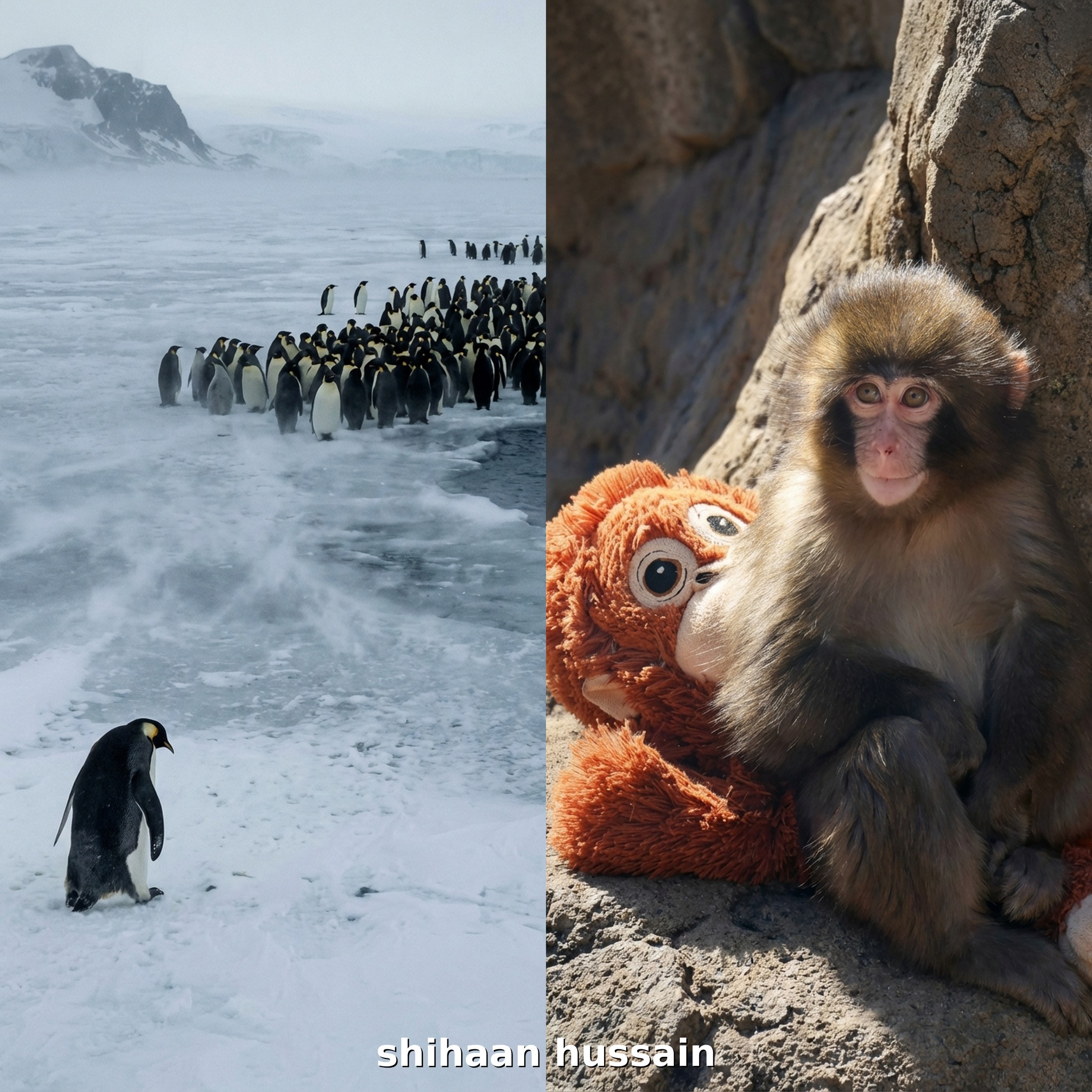
In January, the world paused for a single penguin.
Out on the frozen vastness of Antarctica, the wind swept across endless white ice. Behind him stood his colony of **Emperor penguin**s. Ahead of him was nothing but cold horizon.
Yet he kept walking.
He wasn’t running.
He wasn’t panicking.
He was simply moving forward—one small body against one of the harshest places on Earth.
The image spread across the internet because people felt something deeper in it. Some called it sad. Others called it powerful. Many saw it as symbolic.
Sometimes you outgrow the crowd.
Sometimes staying hurts more than leaving.
And sometimes you don’t even know where you’re going—
you only know you can’t stay where you are anymore.
For many people, that penguin became a quiet metaphor for January. A month of resets. Of difficult choices. Of stepping away from the familiar because the heart can’t survive there anymore.
Then February brought another story.
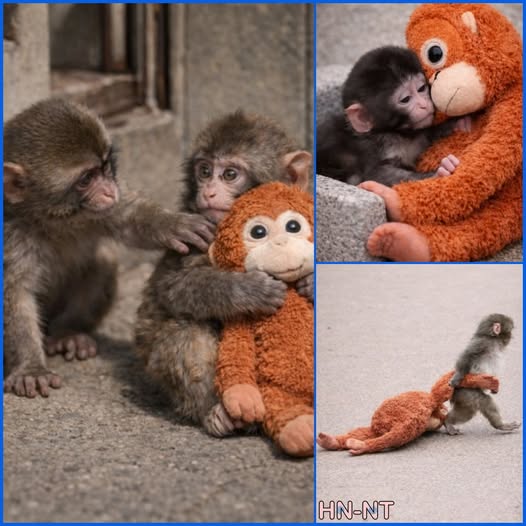
A small Japanese macaque named Punch captured the internet’s attention in a completely different way.
Punch had been hurt and shaken. Instead of retreating from the world or fighting back, he held tightly to a soft toy—something gentle, something comforting.
There was something deeply moving about that image.
A wild animal seeking safety in softness.
It challenged the idea that strength means never needing comfort. Because even the toughest creatures sometimes need something steady to hold onto after pain.
And once again, the internet reacted—not just because of the animals, but because people saw pieces of themselves in them.
One animal walked away from the crowd.
Another reached for comfort after being hurt.
Two completely different responses to hardship.
Both honest.
Both vulnerable.
We often talk about resilience as if it always looks the same—like endurance, toughness, or pushing through alone.
But resilience can look different for everyone.
For some, it means distance.
For others, it means tenderness.
The penguin showed that leaving can be an act of self-preservation.
Punch showed that healing sometimes begins with allowing yourself softness.
Heartbreak never comes with instructions. It doesn’t tell you whether to walk into the storm or stay still and hold onto something that makes you feel safe.
What it teaches instead is awareness—
awareness of what your heart can handle.
awareness of when to step away.
awareness of when to lean into comfort.
January’s lesson was courage in solitude.
February’s lesson was courage in vulnerability.
Both animals reminded the world of something important: survival isn’t always loud.
Sometimes it’s quiet footsteps across the snow.
Sometimes it’s a wounded body holding tightly to a stuffed toy.
Sometimes it’s simply choosing yourself—even when no one else understands why.
And maybe that’s why these stories stay with us.
Because they were never only about animals.
They were about us.
