A turtle’s shell grows for life… and sometimes, so does the damage
A turtle’s shell is not just protection; it is part of its living body, growing and reshaping throughout its entire life. Unlike clothing or external armor, it cannot be removed or replaced. It expands slowly as the animal matures, forming a structure that reflects every stage of its survival. But when human waste enters that process, the result can become permanent in ways that are both silent and irreversible.
This particular turtle began life like thousands of others in the wild. As a hatchling, it likely moved through shallow waters where human debris often collects. Somewhere during those early days, a plastic ring became trapped around its body. At that stage, it may have been small enough that the ring did not cause immediate harm. There was no way for the turtle to remove it, and no natural mechanism to break it away.
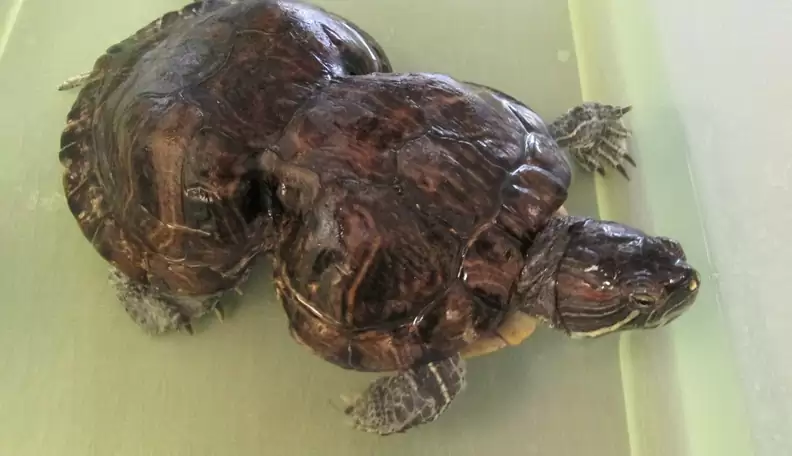
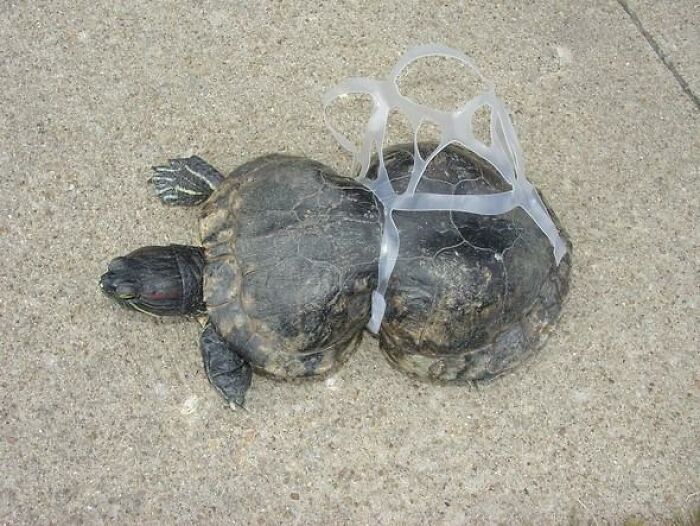
As the turtle grew, its shell expanded outward in all directions. But the plastic ring did not grow with it. Instead, it acted as a fixed barrier, constricting the natural development of the shell. Over time, the turtle’s body adapted to this unnatural constraint. Bone structure shifted. Growth patterns changed. The shell began to form around the ring rather than pushing it away.
The result was a permanent deformation: a figure-eight shape that will remain for the rest of the turtle’s life. Even if the plastic eventually fell off or degraded, the body had already been reshaped by its presence. The damage had become internal and structural, not just external.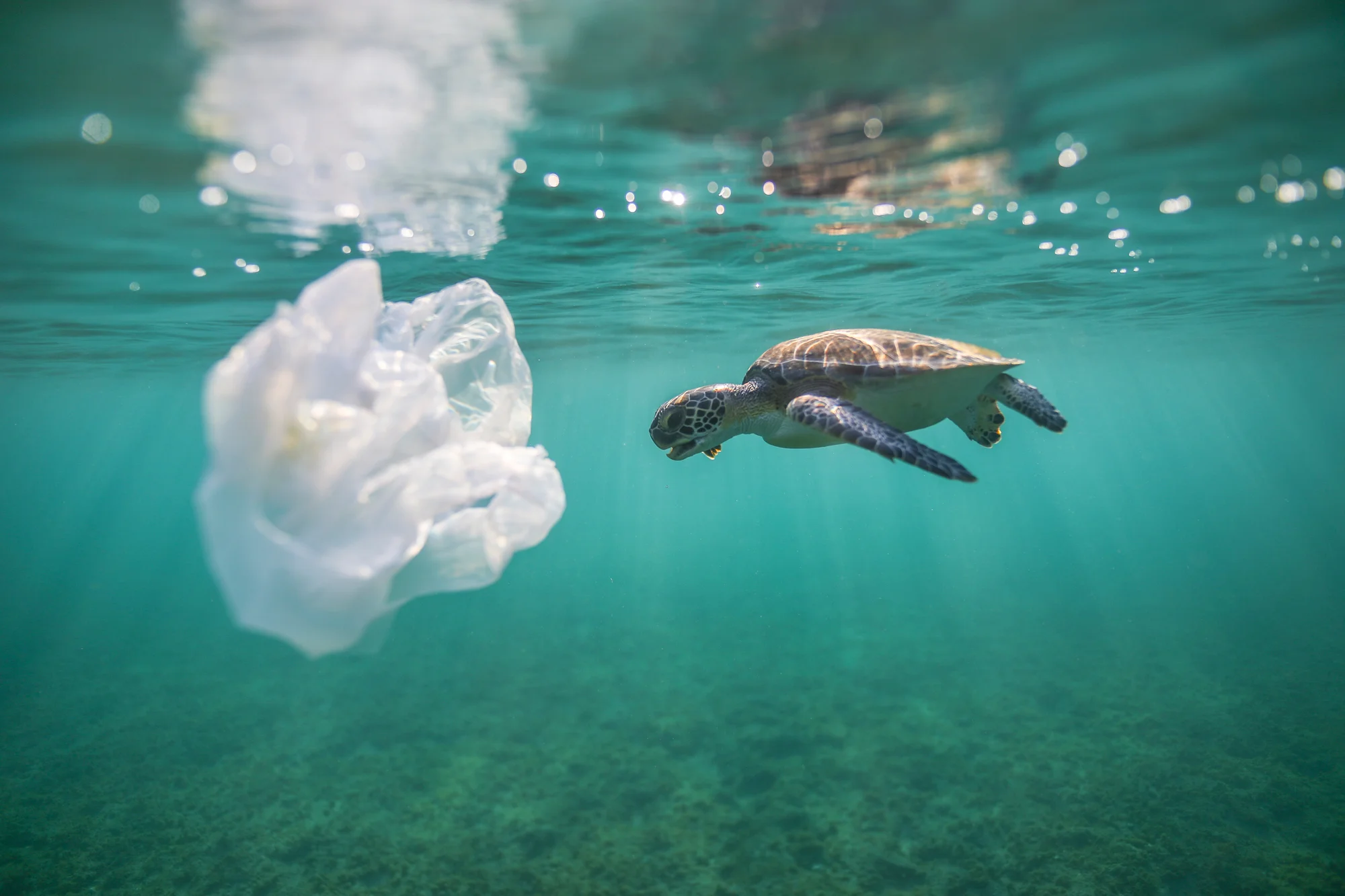
This kind of injury is not rare in marine environments. Sea turtles, along with many other species, often encounter discarded plastics such as rings from bottles, packaging straps, fishing lines, and fragments of larger waste. These materials do not simply float harmlessly in the ocean. They interact with living organisms in ways that can alter their growth, movement, feeding ability, and long-term survival.
What makes this especially significant is the time scale. Plastic waste may enter the ocean in a moment, but its consequences can persist for decades. Wildlife does not have the ability to “discard” harmful objects once they become embedded or entangled. Instead, they adapt around them, even when that adaptation comes at a cost to their health and natural development.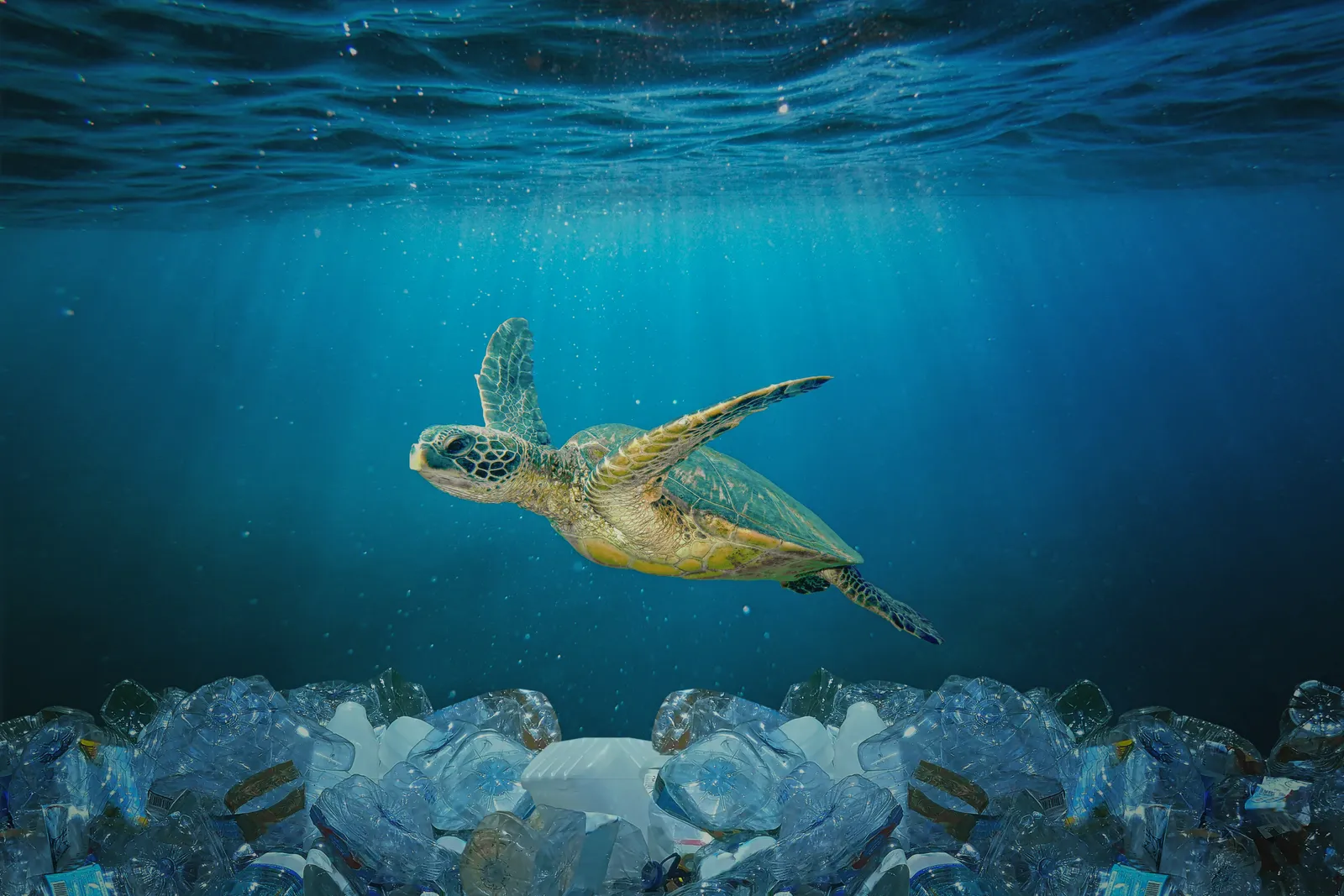
In many cases, these injuries are invisible to human observers until the animal is captured, photographed, or studied. By then, the damage is already done. The story of a single plastic ring becomes a lifelong burden for an animal that had no role in creating it.
The broader implication is clear: small acts of pollution do not remain small once they enter natural ecosystems. A bottle cap, a ring, or a piece of packaging can travel across oceans, persist for years, and eventually interact with wildlife in unexpected and harmful ways.
Protecting marine life begins with preventing waste from entering their environment in the first place. Every piece of plastic properly disposed of, recycled, or reduced reduces the chance of stories like this being repeated. The ocean does not erase what we discard. It carries it forward, often until it finds something living.
A turtle’s shell tells the story of its life. But sometimes, it also tells the story of ours