
The Story of Laika: The Little Dog Who Traveled Into Space
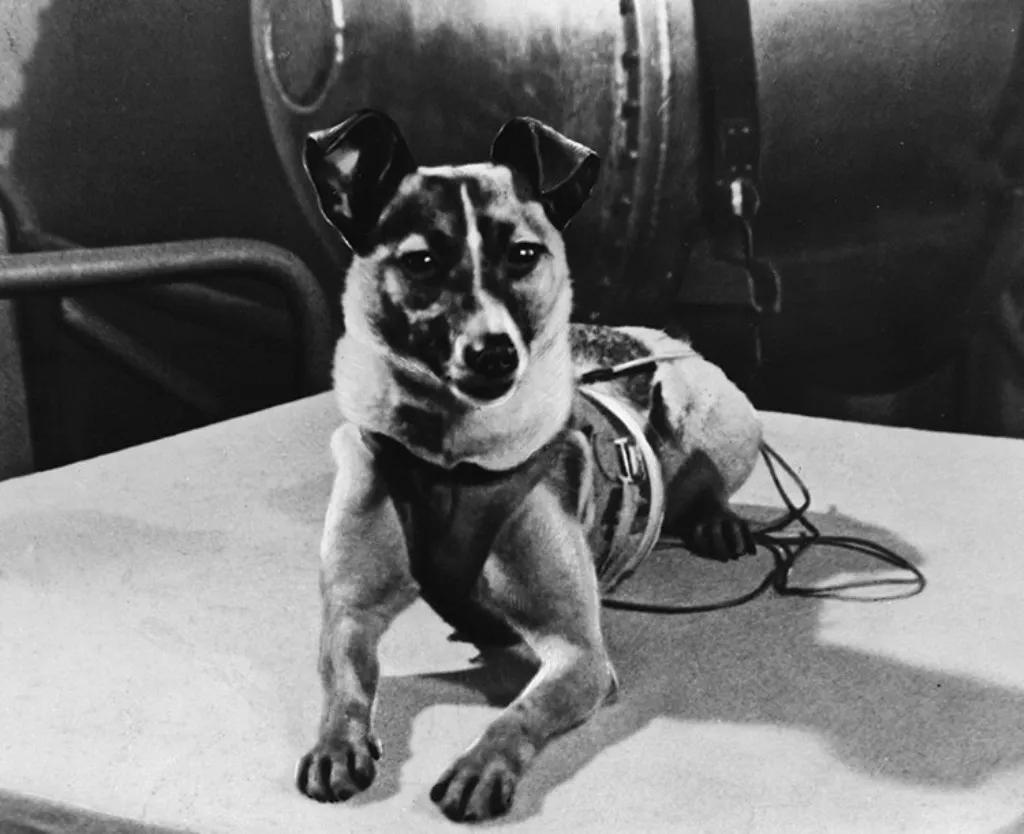
In the history of space exploration, one small dog became one of the most unforgettable heroes of science. Her name was Laika, a stray dog from the streets of Moscow whose journey would forever change humanity’s understanding of space.
From the Streets to a Historic Mission
Laika was not born famous. She was a small mixed-breed stray dog wandering the cold streets of Moscow. Scientists from the Soviet space program believed that stray dogs were more likely to survive harsh conditions because they had already learned to endure hunger, cold, and stress.
In the mid-1950s, as the space race intensified, the Soviet Union wanted to achieve another historic milestone after launching the first artificial satellite. Scientists needed to know whether a living creature could survive the extreme conditions of space.
Laika was selected from several candidates for a groundbreaking mission aboard Sputnik 2.

Training for Space
Before the mission, Laika went through months of training. The tests were extremely difficult.
She was placed in small cages for long periods to simulate the cramped spacecraft cabin. She was trained to eat special gel-like space food. She endured spinning centrifuges that mimicked rocket acceleration.
Despite the harsh preparation, the trainers reportedly became very attached to her. Many of them later admitted that they knew the mission would likely be a one-way journey.
The Launch That Changed History
On November 3, 1957, Sputnik 2 launched into orbit carrying Laika.
For the first time in history, a living creature was orbiting the Earth.
Inside the small capsule, sensors monitored her heartbeat, breathing, and blood pressure. During launch, her heart rate reportedly tripled due to the intense stress of the rocket’s acceleration.
Yet she survived the launch and successfully reached orbit.
This proved something incredibly important: a living being could survive the launch into space and experience weightlessness.

The Sad Truth Behind the Mission
At the time of the launch, the Soviet Union announced that Laika would live for several days in orbit before being euthanized with poisoned food.
However, decades later scientists revealed the truth.
Due to overheating inside the spacecraft, Laika passed away only a few hours after launch.
Although the mission ended tragically, the data gathered from her flight helped scientists design life-support systems for future missions.
Without Laika’s mission, later human spaceflight might not have been possible.

A Legacy That Lives On
Today, Laika is remembered around the world as one of the first pioneers of space exploration.
In Moscow, a monument stands in her honor. The small stray dog who once wandered the streets became a global symbol of courage and sacrifice.
Her story is both inspiring and heartbreaking.
Laika never knew that she would become a hero. She never knew that her journey would help humanity take its first steps toward the stars.
But because of her, the path to space became possible.
Sometimes the smallest heroes leave the biggest footprints in history.
And one of those heroes had four legs and a wagging tail.
