THE GHOST IN THE BRANCH: THE MOMENT A “STICK” LOOKED BACK AT A HUMAN
- BichDuong
- May 18, 2026
THE GHOST IN THE BRANCH: THE MOMENT A “STICK” LOOKED BACK AT A HUMAN
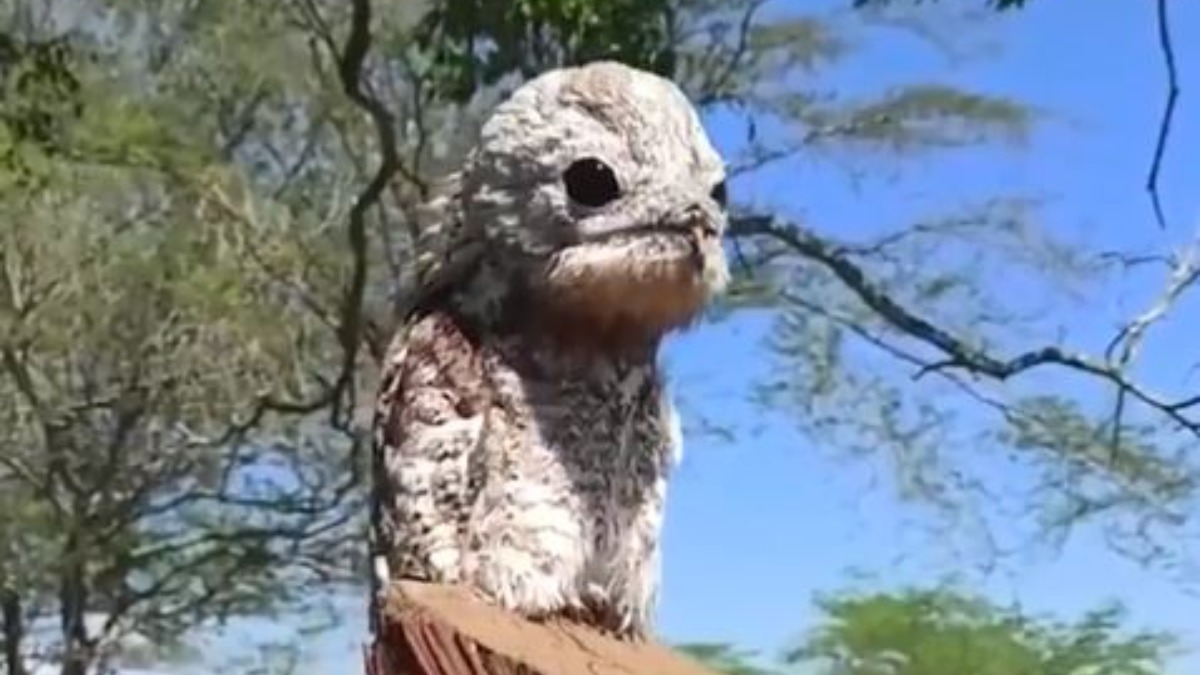
In a quiet rural area of Chibolo, Magdalena, a routine moment turned into something that feels almost unreal, blurring the line between camouflage and imagination in the natural world. A woman was filming what she believed to be nothing more than a broken branch resting among the trees. It was still, narrow, and perfectly shaped like dead wood. There was no reason to think otherwise—until it moved.
At first, only the eyes opened. Then the illusion broke completely as the “stick” revealed a wide, cavern-like mouth. Startled, she instinctively stepped back, later recalling that she felt fear mixed with disbelief. Yet the encounter was so strange, so unexpected, that she continued recording instead of walking away. What she had found was not a piece of wood at all, but one of the most elusive birds in the Americas: the Great Potoo.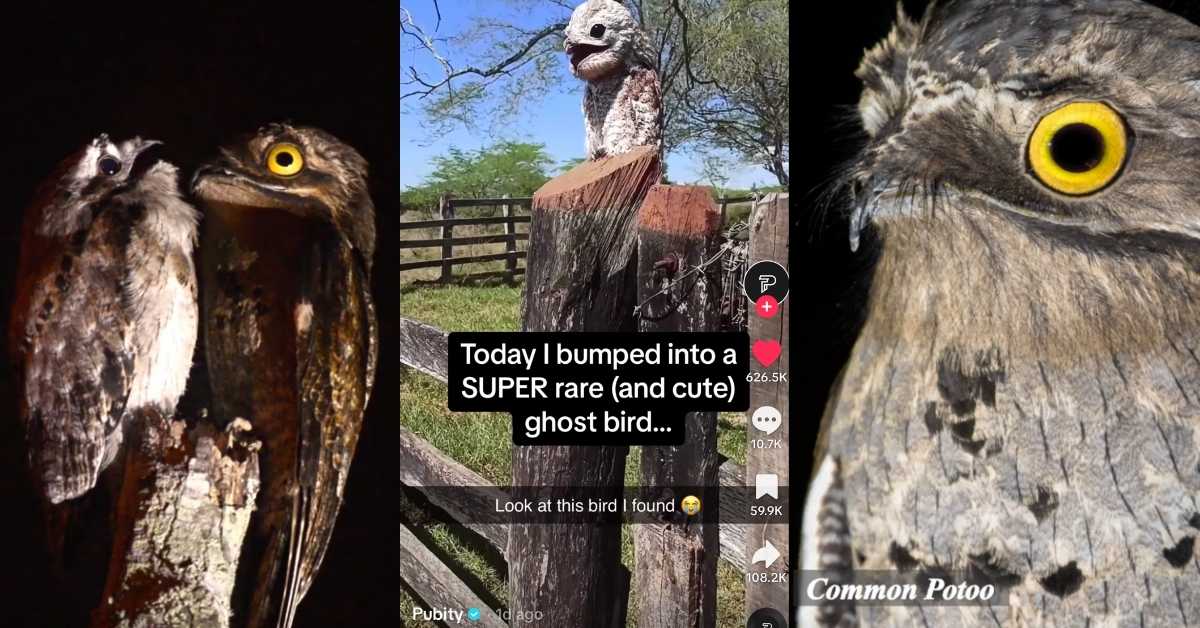
Locally known as the Urutaú, and often referred to as the “Ghost Bird,” the Great Potoo is a master of disguise. Its entire survival strategy depends on becoming invisible in plain sight. During the day, it perches upright on broken tree stumps or dead branches, perfectly aligned with the vertical lines of its surroundings. Its feathers are patterned in shades of gray, brown, and muted ochre, breaking up its outline so effectively that even experienced observers can fail to notice it from just a few steps away. In many cases, people pass by potoos for years without realizing they were ever there.
The bird’s behavior is just as unusual as its appearance. It is nocturnal, belonging to the Nyctibiidae family, closely related to nightjars and frogmouths. By night, it transforms from motionless statue into an efficient ambush predator. It hunts flying insects in sudden bursts of movement, launching from its perch with surprising speed and precision. Its enormous mouth, capable of opening wide enough to engulf large insects mid-flight, gives it an almost surreal, almost prehistoric look when fully extended.
The Great Potoo’s range stretches across a wide portion of the Americas, from Mexico through Central America and deep into South America, including countries like Colombia, Brazil, and Argentina. It prefers forest edges, open woodlands, and riverine areas where it can find both suitable perches and sufficient insect activity. Despite this broad distribution, it is rarely seen due to its extremely low population density and near-perfect camouflage.
In the region where the encounter took place, residents had reportedly heard the bird’s call—a haunting, descending sound that echoes through the night like a distant lament—but sightings had been absent for over fifteen years. That makes the recorded moment even more extraordinary: a visual confirmation of a creature more often known by sound than sight.
After the initial encounter, the woman returned to the same location several times, hoping to see the bird again. Despite her efforts, it never reappeared. The branch that had briefly revealed itself as something alive seemed to have vanished back into the forest’s illusion.
Encounters like this highlight how nature still hides its most remarkable secrets in plain sight. Some creatures are not meant to be easily found. They are meant to be mistaken, overlooked, and only occasionally revealed to those who happen to be looking at exactly the right moment, in exactly the right way.