Friendly Whales Create Extraordinary Human Encounters in the Waters of Baja California Sur
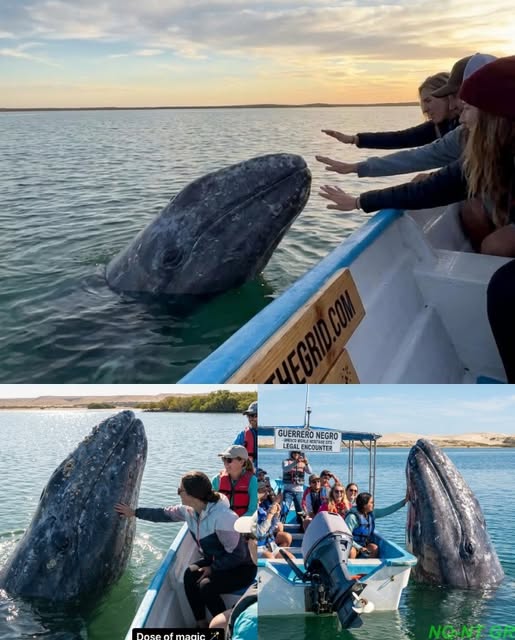
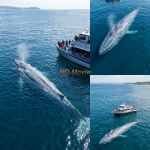
Visitors traveling through the calm lagoons of Guerrero Negro in Baja California Sur, Mexico, are witnessing one of the world’s most remarkable wildlife experiences — close encounters with friendly whales that voluntarily approach human boats in the open water.
The breathtaking region, recognized as part of a UNESCO World Heritage area, has become internationally famous for these rare interactions between humans and marine mammals. Each year, migrating gray whales arrive in the protected lagoons to breed and raise their calves, transforming the peaceful coastal waters into one of the planet’s most important whale habitats.
Unlike typical whale sightings that occur from a distance, these encounters can become astonishingly personal. Curious whales are often seen slowly swimming toward stationary boats, sometimes surfacing only inches away from amazed passengers. In some moments, the giant animals appear to linger beside vessels, calmly observing the people around them before gently disappearing beneath the surface once again.
Under strict environmental regulations, tour operators are required to follow careful protection measures designed to minimize disturbance to the animals. Boat engines are placed in neutral whenever whales approach, allowing the interactions to happen entirely on the whales’ terms. Experts say this policy helps ensure the encounters remain safe, respectful, and noninvasive for both humans and marine life.
Marine biologists have long studied the unusual behavior seen in the lagoons. Gray whales in the region have repeatedly demonstrated levels of curiosity and calmness rarely observed in wild marine mammals of such enormous size. Mothers with calves are often among the whales approaching boats, creating unforgettable moments for visitors lucky enough to witness the encounters firsthand.
Scientists monitoring the area also emphasize that there is currently no confirmed evidence of disease transmission from humans to whales during these carefully regulated interactions. Ongoing research and strict conservation oversight continue to play an important role in protecting the health of both wildlife and visitors while maintaining the fragile balance of the ecosystem.
For many travelers, the experience is described as emotional, surreal, and deeply moving. Seeing a massive whale willingly approach humans in complete silence often leaves passengers stunned by the intelligence and gentleness of the animals.
Conservationists say the encounters also serve as a powerful reminder of what can happen when wildlife is protected and respected. In a world where many marine species face growing threats from pollution, climate change, fishing activity, and habitat disruption, the peaceful relationship developing in these waters stands as a rare symbol of coexistence between humans and nature.
As the giant whales continue gliding through the shimmering lagoons of Baja California Sur, the extraordinary encounters remain among the most unforgettable wildlife experiences on Earth — moments where curiosity, trust, and wonder meet in the middle of the ocean.